Fifteenkey

A place to indulge my narcissism... and write stuff...

Page 2 of 95

“Plastics,” the sequel

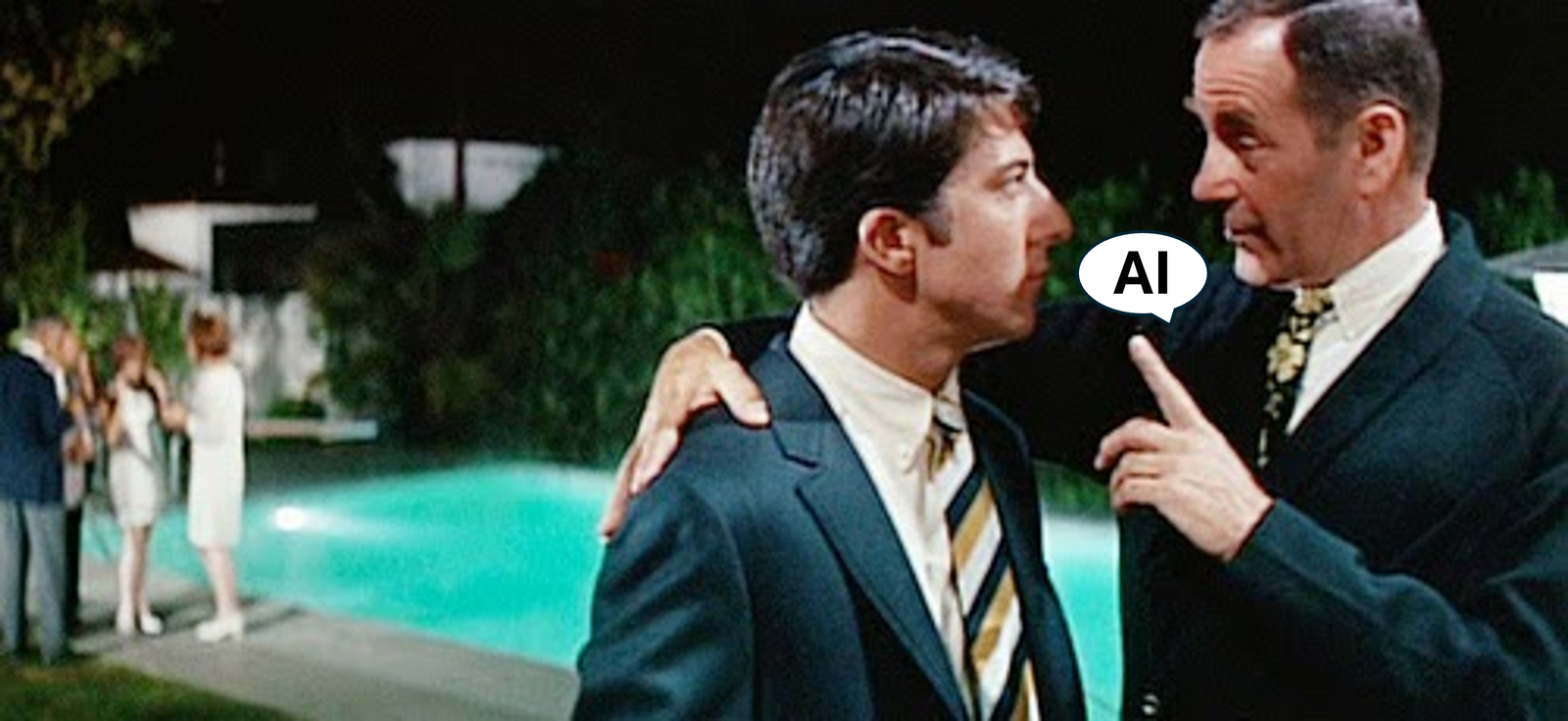
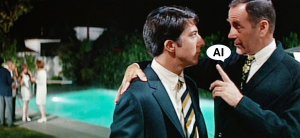
In the 1967 film, “The Graduate,” Mr. McGuire, played by Walter Brooke, tells a young Dustin Hoffman’s Benjamin Braddock, “I just want to say one word to you… just one word… are you listening? Plastics.”

I sometimes feel like Mr. McGuire, as I constantly implore “AI” to my team of young(er) tech professionals to “Master it before it masters you.” That one’s original, but another used when I felt their passive reluctance is attributed to economist Richard Baldwin, “It’s unlikely AI will take your job. It’s more likely that somebody using AI better than you will take your job.”

I’m unsure when my mind made the “Graduate”- AI connection, but the parallel exists. “Plastics” was a sort of AI of the time – the next big thing. A new technology, though I’m not sure many understood the potential long-term implications the new invention would have on future generations, and until recently, the impact of microplastics was not well known or understood. AI is similar. There are many Mr. McGuire’s out there, especially those trying to raise venture capital, and there are others raising fears, yet we don’t have a good understanding of whether AI warrants either the money being thrown at it or if we have much to fear from it.

In my opinion, one thing is sure. AI is an incredibly powerful tool and is, and will continue to be, disruptive in business and in our daily lives. Learning and leveraging it is better than going Luddite and remaining disadvantaged. Like plastics in the ’60s, anything that delivers economic benefit will thrive and grow. AI isn’t going anywhere.

As for the impacts of plastics and the parallels with AI today, I asked my friend Claude to weigh in. I hope our discussion provides an excellent example of what a powerful tool AI can be for you.

Fifteenkey: Please act as an environmentalist and explain to me when plastics became big in the United States and what the impact on our environment has been since.

Claude: As an environmentalist, I’ll provide an overview of the rise of plastics in the United States and their profound environmental impact.

The widespread use of plastics in the United States began in earnest during the 1950s, following World War II. Before the war, materials like glass, metal, and natural fibers dominated consumer products. However, the post-war economic boom, coupled with innovative petrochemical technologies, led to a massive proliferation of plastic materials.

Key milestones in plastic adoption include:

  1. 1950s: Mass production of consumer plastics begins
  • Plastic packaging, disposable containers, and synthetic clothing become increasingly common
  • Manufacturers tout plastics as convenient, lightweight, and inexpensive alternatives to traditional materials
  1. 1960s-1970s: Plastic becomes ubiquitous
  • Single-use plastics emerge, including disposable shopping bags, food packaging, and beverage containers
  • The concept of “disposability” is marketed as a modern convenience
  • Petroleum-based plastic production skyrockets

Environmental Impact:

The environmental consequences have been catastrophic and long-lasting:

  1. Pollution and Waste
  • Over 8.3 billion metric tons of plastic have been produced since the 1950s
  • Approximately 79% of this plastic has accumulated in landfills or natural environments
  • Oceans are now filled with massive plastic garbage patches, with an estimated 8 million metric tons of plastic entering marine ecosystems annually
  1. Microplastic Contamination
  • Plastics break down into tiny particles called microplastics
  • These particles have infiltrated every ecosystem on Earth, from the deepest ocean trenches to remote mountain ranges
  • Microplastics are now found in human blood, placenta, and even breast milk, with unknown long-term health consequences
  1. Wildlife Impact
  • Marine animals frequently ingest or become entangled in plastic debris
  • An estimated 100,000 marine mammals and over 1 million seabirds die each year from plastic-related incidents
  • Plastic pollution disrupts entire marine food chains and ecosystems
  1. Climate Change Connection
  • Plastic production is highly petroleum-dependent
  • The plastic industry contributes significantly to greenhouse gas emissions
  • Manufacturing one ton of plastic generates up to 2-3 tons of carbon dioxide
  1. Recycling Failure
  • Despite recycling efforts, only 9% of plastic waste is actually recycled
  • Most plastics are downcycled or end up in landfills
  • Complex plastic compositions make comprehensive recycling extremely challenging

The environmental legacy of plastics represents a critical challenge for our generation. Addressing this issue requires comprehensive strategies including:

  • Reducing single-use plastics
  • Developing biodegradable alternatives
  • Improving waste management infrastructure
  • Implementing stricter regulations on plastic production and disposal
  • Investing in circular economy models

As an environmentalist, I believe transformative action is crucial to mitigate the devastating environmental impact of our plastic-dependent society. The next decades will be critical in determining whether we can reverse the extensive ecological damage caused by our plastic consumption.

Fifteenkey: And what have the benefits of plastics been over the years?

Claude: While environmental concerns are significant, plastics have also brought numerous important benefits to society since their widespread adoption:

  1. Medical Advancements
  • Disposable, sterile medical equipment has revolutionized healthcare
  • Plastic syringes, IV bags, surgical gloves, and prosthetics have improved patient safety and medical treatment
  • Lightweight, durable medical devices have made complex procedures more accessible and affordable
  • Helped reduce the spread of infectious diseases through single-use medical supplies
  1. Food Safety and Preservation
  • Plastic packaging extends food shelf life dramatically
  • Reduces food waste by protecting products from contamination and spoilage
  • Enables safer transportation of food over long distances
  • Provides better hygiene in food storage and distribution
  • Helps maintain food quality and nutritional value for longer periods
  1. Transportation and Fuel Efficiency
  • Plastic components significantly reduce vehicle weight
  • Lighter car parts improve fuel efficiency and reduce carbon emissions
  • Used in aerospace and automotive industries to create more energy-efficient vehicles and aircraft
  • Helps create more affordable transportation options
  1. Technological Innovation
  • Essential in electronics manufacturing
  • Enables production of computers, smartphones, and other digital devices
  • Provides insulation for electrical components
  • Critical in developing lightweight, portable technology
  1. Consumer Affordability
  • Plastic products are generally less expensive than traditional materials
  • Makes many goods more accessible to people across different economic backgrounds
  • Allows for mass production of household items, toys, and tools
  1. Safety and Durability
  • More shatter-resistant than glass
  • Lightweight and flexible
  • Resistant to corrosion
  • Used in protective gear, child-safe packaging, and safety equipment
  1. Agricultural Improvements
  • Plastic irrigation systems
  • Greenhouse coverings that extend growing seasons
  • Protective packaging for seeds and agricultural products
  • Helps improve crop yields and farming efficiency

While these benefits are substantial, they must be carefully weighed against the significant environmental challenges plastics have created. The key moving forward is developing more sustainable plastic alternatives and improving waste management strategies.

Fifteenkey: Can you estimate how many jobs were created in the plastics industry and how many jobs were lost due to the creation of plastics?

Claude: I’ll provide an overview of job creation and potential job displacement related to the plastics industry, drawing from available historical and economic data.

Job Creation in the Plastics Industry:

  1. Manufacturing Sector
  • The plastics industry has been a significant job creator since the 1950s
  • Currently, the U.S. plastics industry employs approximately 1 million workers directly
  • As of 2022, there were around 16,000 plastics manufacturing establishments in the United States
  • These jobs span various sectors including:
    • Plastic product manufacturing
    • Plastic materials and resin production
    • Equipment and machinery design
    • Research and development
    • Engineering
    • Sales and distribution
  1. Economic Impact
  • The plastics industry generates approximately $589 billion in annual shipments
  • Provides employment across multiple skill levels, from manufacturing workers to high-tech engineers
  • Creates indirect jobs in related industries like chemical manufacturing, packaging, and transportation

Job Displacement: While precise numbers are challenging to calculate, plastics have impacted several traditional industries:

  1. Manufacturing Sectors Affected
  • Glass bottle production significantly reduced
  • Traditional packaging material manufacturers (metal, wood, paper) experienced job losses
  • Some textile manufacturing jobs replaced by synthetic materials
  • Handcraft and traditional manufacturing roles diminished
  1. Estimated Job Losses
  • Difficult to quantify exactly, but likely in the hundreds of thousands across various industries
  • Most significant displacement occurred in:
    • Glass manufacturing
    • Traditional packaging industries
    • Some metalworking sectors
    • Certain textile manufacturing roles

It’s important to note that while some jobs were lost, the plastics industry often created new, different types of jobs. The net effect has been generally positive in terms of employment, with the plastics industry creating more jobs than it displaced.

Interesting Economic Nuance: The rise of plastics didn’t just replace jobs, but fundamentally transformed manufacturing. Many displaced workers found opportunities in new plastic-related industries, representing a shift rather than a pure loss of employment.

Caveat: These figures are estimates based on available economic data and may not capture the full complexity of industrial transformation caused by the widespread adoption of plastics.

Fifteenkey: So, would you consider the introduction of plastics to be a net positive or negative in the United States?

Claude: As an environmentalist, I would argue that the introduction of plastics presents a complex and nuanced picture with both significant benefits and profound drawbacks. It’s not a simple binary of positive or negative, but rather a complicated legacy with serious consequences we’re still grappling with.

From a balanced perspective, plastics have been a double-edged sword:

Positive Contributions:

  • Revolutionized medical care with sterile, disposable equipment
  • Improved food safety and reduced food waste
  • Enabled technological innovations
  • Created hundreds of thousands of jobs
  • Made many consumer goods more affordable
  • Supported critical advances in transportation efficiency
  • Provided lightweight, durable materials for numerous applications

Negative Consequences:

  • Catastrophic environmental pollution
  • Massive ecological disruption in marine and terrestrial ecosystems
  • Contribution to climate change through petroleum-based production
  • Microplastic contamination in global food chains
  • Long-term environmental degradation
  • Health risks from chemical leaching and microplastic exposure

If forced to make a definitive assessment, I would cautiously say that while plastics brought important short-term benefits, their long-term environmental costs likely outweigh those advantages. The environmental damage we’re experiencing – and will continue to experience for generations – represents an unsustainable trajectory.

The most responsible path forward isn’t to completely eliminate plastics, but to:

  • Dramatically reduce single-use plastics
  • Invest heavily in biodegradable alternatives
  • Develop comprehensive recycling infrastructures
  • Create circular economic models
  • Prioritize environmental restoration

The introduction of plastics represents a critical lesson about technological innovation: we must consider long-term ecological consequences, not just immediate convenience and economic gain.

Fifteenkey: Would you say that we must also measure the short-term benefits against the long-term consequences of artificial intelligence?

Claude: This is an excellent parallel that requires nuanced consideration. Just as with plastics, artificial intelligence (AI) presents a complex landscape of potential short-term benefits and long-term consequences that we must carefully evaluate.

Short-term AI Benefits:

  • Breakthrough medical diagnostics
  • Accelerated scientific research
  • Improved efficiency in various industries
  • Potential solutions to complex global challenges
  • Enhanced problem-solving capabilities
  • Advances in personalized education and healthcare

Potential Long-term Consequences:

  • Significant workforce displacement
  • Ethical concerns about privacy and surveillance
  • Potential existential risks from advanced AI systems
  • Deepening economic inequalities
  • Challenges to human agency and decision-making
  • Potential for misuse by malicious actors
  • Unpredictable societal and psychological impacts

The plastics analogy is particularly apt. Just as early plastic innovators didn’t fully anticipate the environmental catastrophe they were creating, we may be at a similar inflection point with AI. The immediate conveniences and innovations could be masking potentially profound and irreversible consequences.

The key lessons from the plastics revolution suggest we need:

  • Proactive, comprehensive regulation
  • Ethical frameworks that prioritize long-term human welfare
  • Robust mechanisms for assessing and mitigating risks
  • Transparent development processes
  • Interdisciplinary approaches that consider broader societal impacts

Unlike plastics, which took decades to reveal their full environmental impact, we have the opportunity with AI to be more forward-thinking and precautionary. We must balance innovation with responsible stewardship, learning from historical technological transformations that prioritized short-term gains over long-term sustainability.

The most responsible approach is to proceed with cautious optimism, continual assessment, and a commitment to understanding and mitigating potential negative consequences.

Oh say, can you see?

I listen to podcasts when I ride my bicycle. Sometimes the sights, sounds, and blood pumping up billions (OK, fewer than there used to be) of neurons coalesce into thoughts like small flowing tributaries merging into a life-affirming river. Yesterday’s blend included the words of Wilco’s Jeff Tweedy, politics, the recent Olympics, and a gently waving flag.

The 10% Happier podcast featuring Dan Harris interviewing the Wilco frontman is a worthy listen. In fact, I may need a repeat. Jeff is a deep dude, and the conversation was fun and insightful. In the deep end, here’s his take on how each of us uniquely experiences a song, or any art, really:

“…each song has its own meaning with each consciousness it encounters. In some cases, the meaning might be almost nothing because it doesn’t work. The magic doesn’t work for some people. That song could mean everything completely and encapsulate a moment in time in their life. It could like intertwine itself with sense memories like even smell, you know. So there’s just… it’s just about how beautiful. I think that is that we can listen to a song you and I can like the same song. We can love the same song. We can maybe even compare notes and think that the song means just about the same thing and like on its face. But your version of it is never going to be exactly like mine and the way that your life gets absorbed into that song is going to be its own world compared to mine.”

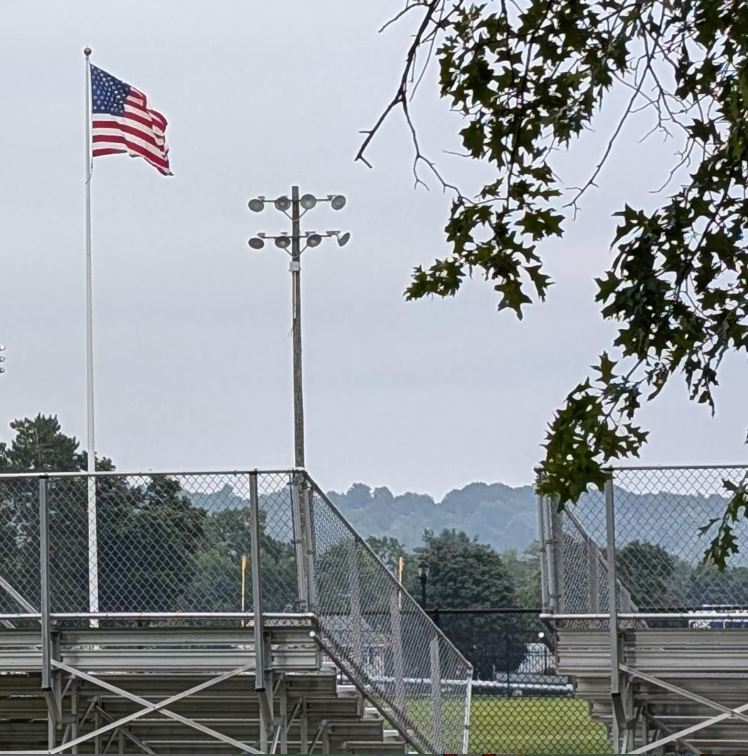
Pedaling along through a local park, a gently waving flag caught my eye. It burned an impression in me because, on my return trip, I stopped to take this picture.

The light wind breathed a gentleness into the red, white, and blue cloth and while it evoked a positive feeling at that moment, Tweedy’s words had me wondering how others at different times and places perceived our national symbol.

Scenarios ran through my mind like a flickering filmstrip. I recalled recently watching “Band of Brothers” and the scenes of American troops liberating a German concentration camp. How did those prisoners see our flag? What about Vietnamese civilians during that conflict in the 60’s and 70’s? Some of you may remember the national unity we felt in the aftermath of 9/11 and the powerful symbolism of our flag being raised against a backdrop of death and destruction. The reasons for hatred of our country by many in the Middle East and across the world can be debated, but for the moment, I think it’s understood our flag is not universally loved.

That brings me back home to a place where our flag is not co-opted by fellow citizens who attempted to overturn an election on behalf of a man who received five military draft deferments to avoid serving his country.

Then there’s Gabby. Gabby Thomas, Simone Biles, Katie Ledecky, Quincy Hall, Cole Hocker, Kristen Faulkner, Torri Huske, Ryan Crouser, LeBron James, Sha’Carri Richardson, Noah Lyles, A’ja Wilson, Kahleah Copper, Sydney McLaughlin-Levrone, Christophe Bailey, Vernon Norwood, Bryce Deadmon, Rai Benjamin, and so many other US athletes were rewarded for their efforts and draped themselves in the Stars and Stripes while looking thrilled to do so.

Last week, after getting lost in the hills of nearby Leominster and Sterling, MA, I was struggling to get home over the last 10 or so miles when I saw a flag hanging off a building 100 years ahead and up a hill. My legs were leaden, and my breathing was just about maxed out. I was tempted to stop and walk up the hill. That’s when my imagination kicked in with a motivator, “Fuck that, dude. If you quit, Trump’s going to win.” I pedaled up the hill and the rest of the way home.

I want our flag back and more reasons to feel pride when looking at it.

Tour de Falmouth!

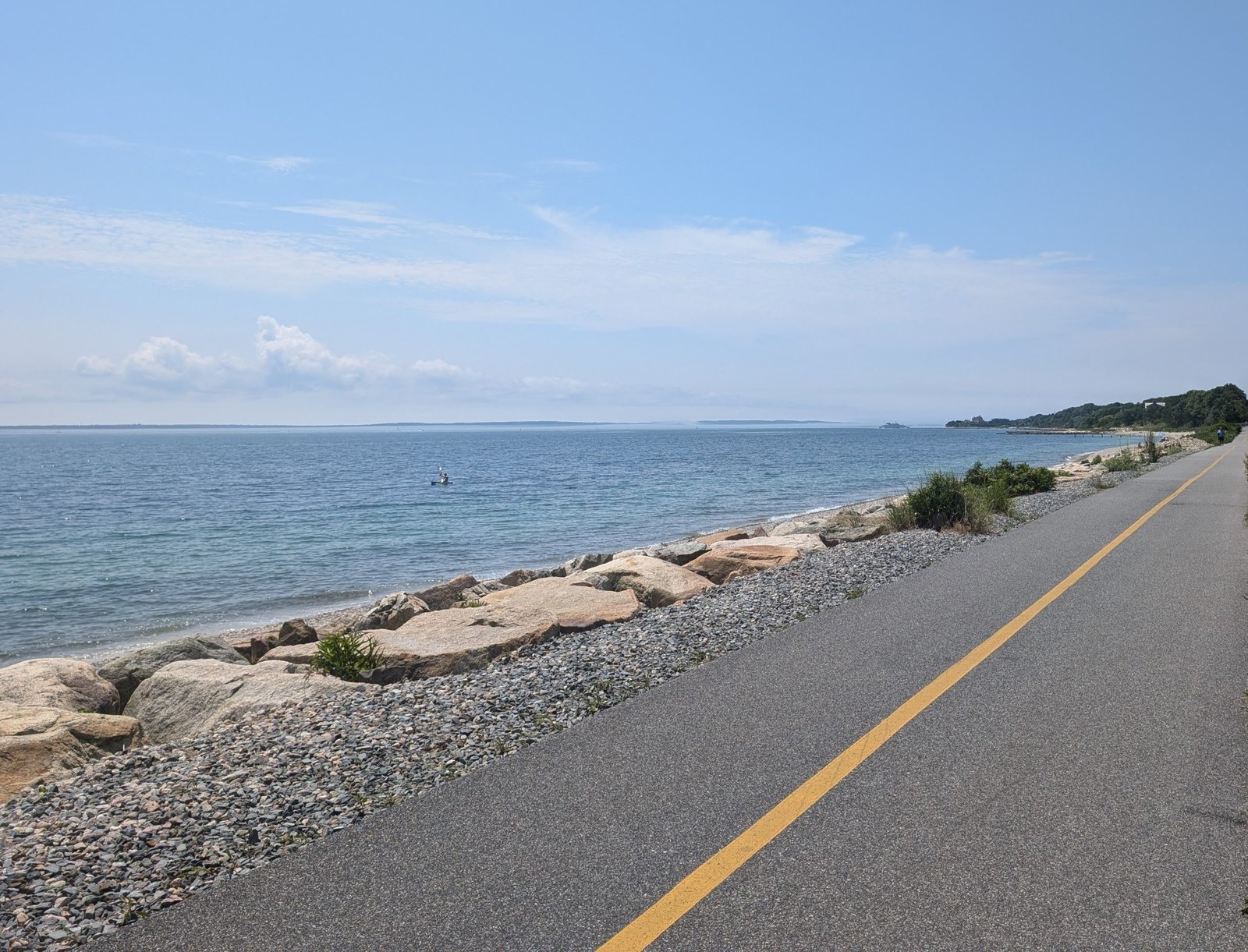
Besides the family bonding, the beach, the restaurants, and the not working thing, last week’s Cape Cod vacation was about riding my bike. A lot. I had one goal going into the week: to do a 30-mile ride, but once I logged an opening 26.48 on Sunday, a dual goal of 100 miles was established for the week, mostly pedaled along the Shining Sea Bike Trail. I hit both goals and scored 14.79 bonus miles on a family ride from West Falmouth to Woods Hole.

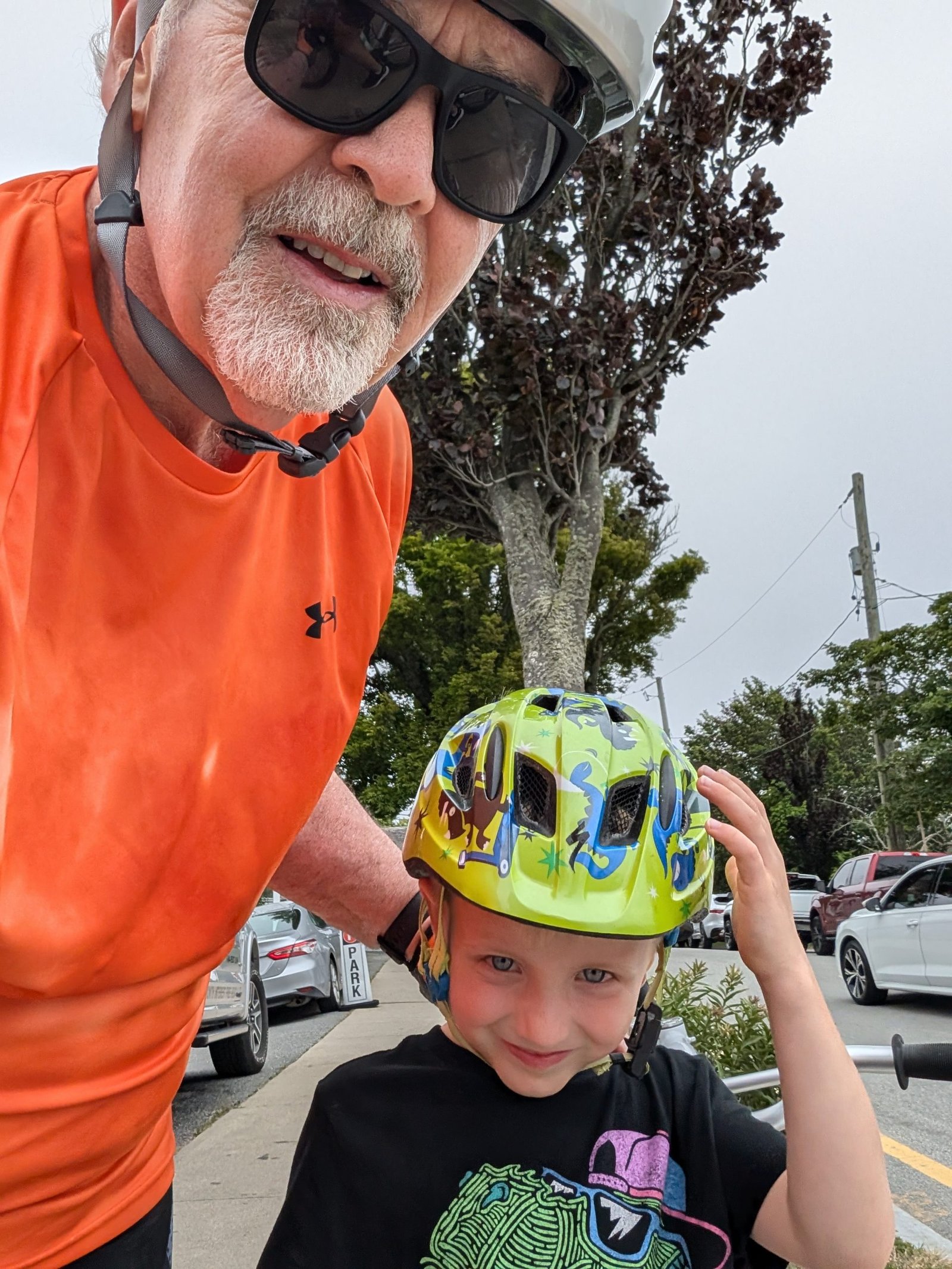
The week was a 3-generation potpourri of Senior Citizens (not naming names), daughters, a son, and grandchildren of varied genders, ages, and bike riding capability (again, not naming names). I must give props to my daughter, Megan, who at (number redacted) years old and quite pregnant, banged out the nearly 15-miles like a champ. Grandson Luca and I stopped about 15 times so the group with the newbie rider (no names) could catch up to us. The boy and I were a tandem, with the little dude’s “bike” hitched to mine. It was more like a chariot, with Luca playing Charlton Heston and me playing the horse. A few times over the route, this conversation took place:

Me: “Luca, are you pedaling?”
Luca: “No!”

My solo rides were just as eventful.

Day one, I was riding along the bike path when I approached a damsel in distress. I initially rode past her, but seeing that one of her pedals had fallen off, I thought I could help, so I banged a uey. When she looked up, I was startled and said, “oh, I’m not sure I can help you wearing that Yankees hat.” The poor woman explained that she bought the hat in Canada and didn’t know what team it was for. You know, since 2004, I have more empathy for those poor fans, so I helped her get her pedal back on. A few miles later, as I was crossing busy Route 28 to get back on the path, the same pedal fell off my bike in the middle of the road. Clearly, the karma police were not happy I helped someone sporting the dark mark of the Evil Empire.

During the dirty thirty, I navigated downtown to see if the wonderful Greek place could accommodate a party of 12 for my granddaughter’s birthday. Across the street, in front of the Falmouth Post Office, a woman caught my attention and pointed to a man across the street who seemed lost. The woman said she believed he was blind. I wheeled over and asked if he was OK. He wondered where he was. “Well, Osteria La Civetta is behind you to your right, and Estia is behind to your left.” “Is the Post Office across the street?” “Yes,” I replied. The problem the man faced was a delivery truck protruding out over the sidewalk from a driveway between the restaurants. I helped him and his guide dog around the truck and we chatted for a few minutes in front of Estia. Dwight was in town for six weeks while his wife worked at the Woods Hole Oceanographic Institute. After speaking with the hostess about seating, the encounter and conversation with Dwight stayed with me. Though disabled and facing a frustrating obstacle, Dwight was unfazed and calm. As I rode off toward the bike path, so was I.

Losering, Part 4,361.7

I’ve probably mentioned the time my mom asked, rather loudly, in a department store, “Where is your husky section?” I was pre-teen and mortified. In the half-century plus since, I’ve tried so many “diets” with limited success. Atkins. South Beach. Weightloss competitions. At this point, I would try to draw an inverse relationship between gravity and my weight cleverly; one pulls down, and one goes up. However, my friend, Pi AI bumped me off that path, explaining that gravity doesn’t really “pull” smaller objects “down” toward objects of larger mass, but rather is the result of a curvature of space and time. OK, fine. I’ll change the metaphor to a curvature of waist over time.

In November, during an annual physical, my doctor was tactful, but her message was similar to one heard at every yearly checkup: lose weight. The advice, uh, weighed on me and given my age, was received with a bit more gravity than in past years. I didn’t want to live the Pink Floyd lyric from “Dogs:”

And it’s too late to lose the weight you used to need to throw around

As is my wont, I descended the dark walls of the interwebs to discover the way. Reddit is a favorite. It’s a massive community of special interest groups, or “sub-Reddits” including r/cico (calories in, calories out), r/loseit, and r/weightlossadvice. Scrolling those threads, I learned two key things that have worked for me:

  1. To lose weight, one must create a calorie deficit between those you take in by eating, and those you burn while living. i.e. calories in, calories out
  2. The only way for me to manage the calories in is to track them

I began on December 1st, tracking what I ate in a spreadsheet. As I kept burrowing, I discovered many apps help with food tracking and calorie counting. I opted for LoseIt! and discovered the most important thing about losing or maintaining weight for me is being accountable about what I eat. During the holidays with treats orbiting everyone’s existence, I was steadfast. “Do I want to log that chocolate chip cookie at 2:30 in the afternoon on a Tuesday?” No, I do not. I dropped weight during the holidays and track everything to the point of annoying my family with this shrinking obsession. They tolerate it because they love me and believe my efforts are to benefit my health. And they ignore me when I state my real reason is purely the vanity of donning a speedo for upcoming beach season.

I’m down 20.4 pounds, but have a long way to go.

Happy Anniversary! Now what?

I noticed that Beth and I have been married for 6 months today. That went fast. Life does. April 24, 2000, was my first day at Kronos, now UKG. Pair that with the 16 years I logged with NEC, and I sense I’m playing the last song of a 40-year set in technology. I’m still enjoying the gig. I have a diverse team that plans, manages, develops, maintains, and supports technologies that are used by over 200,000 customers, partners, and employees. When I say “diverse,” I mean diversity of skills, interests, work approaches, family dynamics, and human idiosyncrasies that challenge me more than any technology puzzle. While I’m still enjoying the daily grind (no, not coffee), I struggle with when to end the song and whether there will be an encore. I mean, there has to be, right? I can’t go from 40 years of loud, pulsating jams to silence – not counting my daily meditation.

Enter AI. Since late last year, I’ve been pushing my team and anyone else who will listen about Artificial Intelligence (AI), and specifically Generative AI. You’ve probably heard of it in the news, and ChatGPT has received most news coverage. This particular generation of AI are “Large Language Models.” Basically, that means these machines have ingested most of the content of the entire internet and are “trained” to respond to questions (“Prompts”) in a coherent, written narrative, not just a list of links that you then have to hunt and peck through to find what you’re looking for. Here’s an example of a recent prompt and the response from my favorite AL, Pi.

Me: “Please plan a romantic artsy long weekend starting Friday, April 5th, in Fitchburg, MA. Stops will be in Shelburne Falls, North Adams, and Stockbridge, with overnight stays near Williamstown and Lenox. Please recommend overnight accommodations and farm-to-table restaurants for breakfast and dinner.”

Pi: “Here’s an itinerary with recommended accommodations and farm-to-table restaurants for breakfast and dinner during your romantic, artsy long weekend:

Day 1 (Friday): Fitchburg to Shelburne Falls and Williamstown

  • Depart Fitchburg and drive to Shelburne Falls.
  • Explore the village and visit the Bridge of Flowers.
  • Drive to Williamstown and check into The Williams Inn.
  • Enjoy dinner at Coyote Flaco for homestyle Mexican eats, wine pairings & margaritas.

Day 2 (Saturday): Williamstown and North Adams

  • Start your day with breakfast at The Williams Inn, offering fresh, locally sourced ingredients.
  • Spend the day exploring Williamstown and its cultural attractions.
  • Drive to North Adams and visit MASS MoCA.
  • Enjoy dinner at Mezze Bistro & Bar at 6:30, featuring locally sourced New American cuisine.
  • Return to your accommodation in Williamstown.

Day 3 (Sunday): Williamstown to Stockbridge and Lenox

  • Breakfast at Tunnel City Coffee
  • Depart Williamstown and drive to Stockbridge.
  • Visit the Norman Rockwell Museum and explore the town.
  • Drive to Lenox and check into the Cornell Inn.
  • Enjoy dinner at Alta Restaurant & Wine Bar, serving sophisticated New American cuisine made with local ingredients.

Day 4 (Monday): Lenox and return to Fitchburg

  • Start your day with a gourmet farm-to-table breakfast at Cornell Inn.
  • Visit the Tanglewood Music Center and explore the town of Lenox.
  • Enjoy lunch at Cafe Triskele, offering locally sourced, organic meals.
  • Drive back to Fitchburg and conclude your long weekend getaway.

These recommendations offer a mix of comfortable accommodations and delicious farm-to-table dining options for a memorable and romantic artsy weekend in the Berkshires. Remember to book your accommodations and make restaurant reservations in advance to secure your spots. Enjoy your trip!”

Pi generated this response in about 10 seconds. It would have taken me at least a few hours to assemble the whole thing. I can do the same with meetings. Last week, I had a conflict and missed a meeting. I fed the transcript into our private (protects proprietary data) instance of Vertex (Google) and received a concise meeting summary in ten seconds. If you’ll be working for the foreseeable future, get on this. Now. Here’s a cool prompt library to give you some ideas.  Download AI apps to your phone and get to know them. You’ll quickly discover ways they can help you, professionally and/or personally.

I know there’s fear about the impact of this technology on people with job displacement, but a recent podcast quote I heard provided some perspective.

“It’s unlikely an AI will take your job. It’s more likely someone using AI better than you will take your job.”

Now, I need to figure out how to use these incredible tools for my encore.

Ramblin’ Man

I don’t know where to begin. My last blog post (yeah, that sounds old, but it is what it is… old. Maybe I should call it my Substack Newsletter.) Speaking of old, since my last installment I got another year older, wed, and celebrated my young bride’s birthday all in 3 days. That was a good weekend. I recently received my first quarter performance appraisal and a “Met Expectations.” WTF? But like they spin it in corporate America, “No, that’s really good.” No, “Exceeded Expectations” or “Far Exceeded” is really good.

Aside from working to “far exceed” the expectations of my extremely low-maintenance wife, I’ve been working on a few other things.

Meditation – I think this daily practice helps me with everything else and it takes roughly ten minutes a day. I’m using the “Waking Up” app from Sam Harris, but you don’t need an app. Close your eyes. Focus on your breath – the in and out of air at your nose or the rising and falling of your chest. Every time your mind wanders, and it will about 100 times in 10 minutes, simply notice it and return to focusing on your breath. That’s it.

Exercise – I’ve been consistently doing an hour or more three times a week – about 30 minutes of stretching / yoga / weights, and 30 minutes of cardio on my stationary bike or elliptical. Oh, and I’m still doing some of my PT exercises since 2 hip replacements. It takes a long time to regain range of motion after babying those joints, muscles, and tendons for years.

Weight Management – This began around December 1st and per my usual exhaustive research, I discovered accountability. I read some about mindful eating and being truly aware of what one is pie holing, but it was not until I began journaling the foods I ate that it worked. Now, I do accuse Beth of sabotaging my efforts with her holiday (hell, it’s all year) baking (she denies the charge), but when I asked myself, “do you want to log that chocolate chip cookie at 120 calories, pal,” the answer was usually no. I began simply logging what I ate in a Google Notes file but then moved to an Excel Mobile spreadsheet where I could more easily add up calories, but then, again after exhaustive research, I opted for the LoseIt app that makes the whole process much easier. Oh, a (insert more exhaustive research) food scale was added to the mix and at this point, I’m irritating the crap out of my son Kyle with the calorie counting. All of this has resulted in 5.4 pounds lost in December and another 4 so far in January. We’ll see if I can sustain these practices and 2,200 daily calories long-term.

Work-work – I’m still going with the full-time gig and have been doing it in tech now for 40 years (see “old” above). I have a smart and fun team of six and being part of what they and people from related teams are achieving is the most rewarding part of the job. I still have individual contributor responsibilities, but helping other humans grow to meet their wildly different needs is stimulating and rewarding. One huge benefit of being in “overtime” of my career is that with fewer f’s to give, I can be very honest with everyone. Not “completely” honest, mind you, but close. Some things still must be politically couched for one’s survival and just to not be a dick. Finally, in the “teach old dog new tricks” category, I’m diving into generative AI. I’m sure my team is sick of hearing about it, but the more time you have left in your career, the more important it is for you to learn how to use it to your benefit. As I tell my team, “master it before it masters you.”

Succession Depression

I don’t know what it is about September, but it seems to throw me into a funk. Last night after watching S2 E6 of “Succession,” I said to Beth, “I think I’ve had it with this show. I don’t like what it’s doing to me.” As John Paul Jones and Jimmy Page co-wrote, “Lyin’ Cheatin’ Hurtin’ That’s All You Seem To Do.” That’s how I feel about the awful characters on the show. It’s a night-time soap opera about rich entitled assholes modeled on the Fox News-owning Murdoch family. That makes me wonder why I began watching it in the first place, but hey – some people love it.

The shitty feeling I had after consuming a couple of episodes last night made me think about why. As is my wont, I searched and found a few articles/blog posts on the concept, “You Become the Content You Consume.” Bingo. I don’t want to become like those people, so why consume their rotten ways? I don’t want to get soul poisoning.

In that vein, I’m also cutting back on ingesting political content, especially Orange Soul Crush. Of the 54 days and 12 hours of podcasts I’ve listened to since October 22, 2017, political casts have dwindled. My current top listens are:

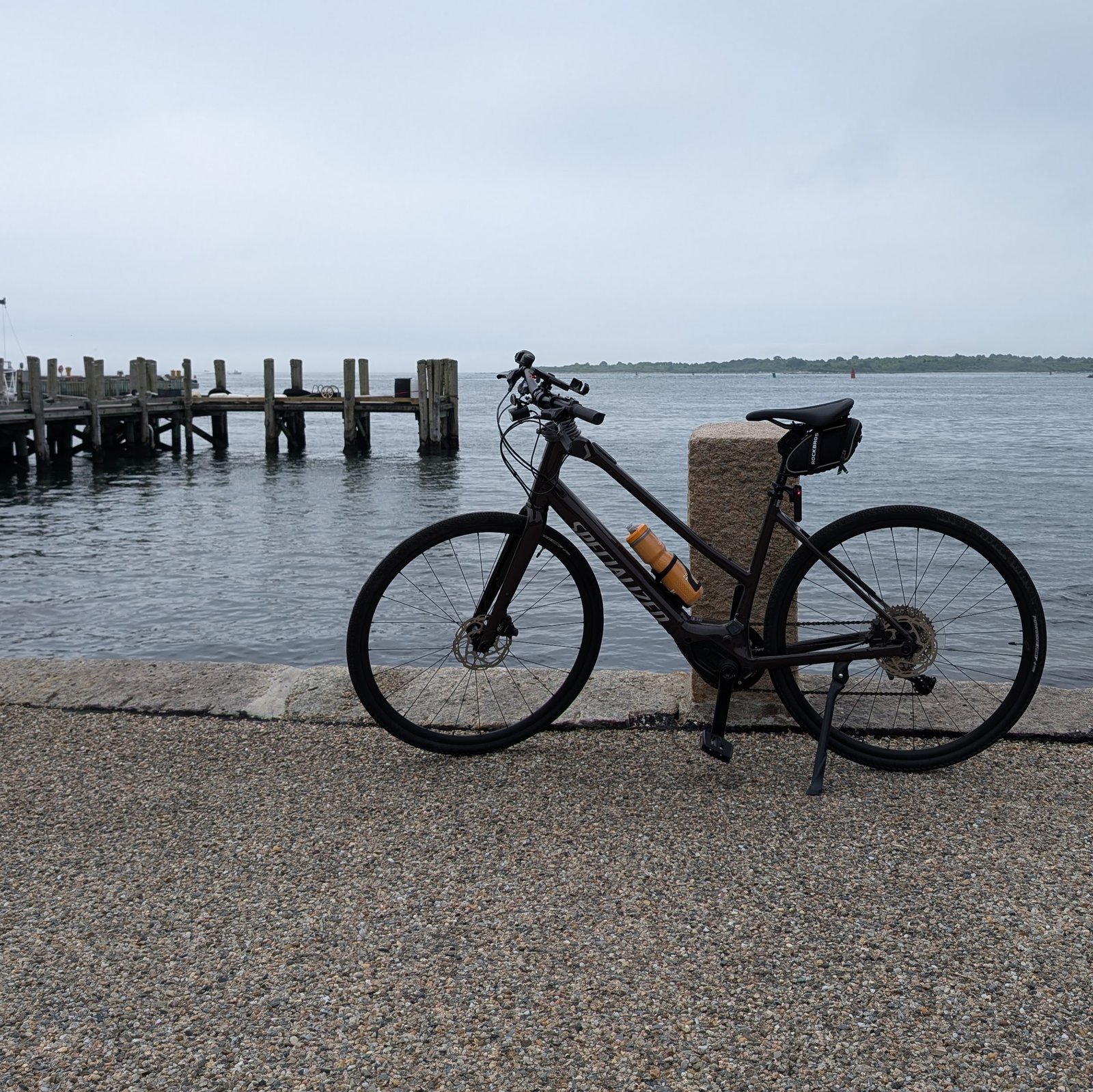
As for the September slump, the only thing I can recall clearly is not working out much during them. Maybe it’s recovery time from busy summers or just the doldrums of facing another winter. Not this year. I’m working on consistency with my new bike, so hopefully I can keep that going right into the Fall until New England weather forces the cycling indoors. For now, it’s a beautiful day, so I need to get on my bike and ride!

Hip Check

No, not this kind. That would probably hurt more than I’d like right now. Anyway, today I’m 18 days post-op on hip replacement #2 and as Larry David would say, I’m feeling “pretty pretty pretty pretty good.” It’s funny (strange) because my surgeon told me this (right) one “was tough to get out” and was in worse shape than the left hinge he replaced in late September. The first week was rough as the surgical trauma was more intense this time, so more of all the bad stuff like pain and swelling, but the combo of ice and Tylenol Extra-Strength while lampin’ like Larry and Leon got me to the point where I needed neither pretty quickly. Oh, and I didn’t take any of the Oxy, either. Yeah, I think that was part fear, and part trying to be a tough guy, but I won’t overthink that past.

On Monday during an in-house Physical Therapy session with Kristie, I asked, “when will I be able to get on my stationary bike?” She shuffled through some notes and replied, “I don’t see any restrictions.” What? I thought it would be 4-6 weeks for that, but no, and minutes later I was pedaling away, largely pain-free. I was sooooo happy! Since then, I’ve done a couple of five-minute sessions each day plus my PT exercises and aside from some achiness, the flesh and bone surrounding my new bionics are healing, stretching, and strengthening. Outpatient PT starts next week, and while I know Joyanna will hurt me, I won’t hold it against her because she’ll be pushing and pulling me toward the day I get on my road bike. Just thinking of that has me a bit verklempt.

Speaking of looking forward… Well, wait. One thing meditation has taught me is to pay attention and enjoy the moment. Like now. Well, I’m sitting in my home office laptop pecking and listening to the Pernice Brothers, “Overcome By Happiness,” a pop masterpiece released in 1998. Oh, man. What a record that hold up 25 years later. You should go buy it right now. So, back to the future. Dave of “Dave and Jeff” fame will be making an area appearance for a May 18th show with the aforementioned band where they will play “Overcome” in its entirety! Big D also has never been to Fenway Pahk, so we’ll try to catch a ballgame. Yep. Overcome by happiness.

Nestin’ and Lampin’

Today I:

  • Worked on some day job stuff
  • Paid bills and filed forms due for my son
  • Completed and submitted Federal and State taxes for 2022
  • Prepped Pasta Fagioli and Bolognese sauce for the week

It seems I’m in a pre-surgery “nesting” phase, but I did not:

  • Wash and fold all your clothes, towels, and sheets – Nope. Beth loves to do that!
  • Deep clean all areas in your bathroom – I pay Fran for that
  • Purge unwanted items that do not spark joy – See “bills” above
  • Finish any incomplete home projects – That’s not happening either…

You see, my right hip is in what professionals call a “bone on bone” state, and while it’s painful and debilitating, based on what I read online, my symptoms aren’t nearly as bad as some suffer, though since… Well, I often like to quote lyrics in my posts, so:

The foot bone’s connected to the leg bone.
The leg bone’s connected to the knee bone.
The knee bone’s connected to the thigh bone.
The thigh bone’s connected to the hip bone.
The hip bone’s connected to the backbone.
The backbone’s connected to the neck bone.
Doin’ the skeleton dance.

See, with all those connections, having a bum hip really rules out any kind of dancin’ and many other activities we humans enjoy, including home projects. However, for the record, I did snowblow and shovel the 21 wet and heavy inches we got dumped on us last Tuesday, so there.

Anyway, my surgeon did a great job replacing the left joint back in September and I’m hoping for a repeat performance on Tuesday. Incredibly, anterior hip replacement surgery is an outpatient procedure for yours truly, so by Tuesday night I’ll be lampin’ like Larry and Leon here and ridin’ my bike a couple of months later. See you on the other side, Slick.

Rust Never Sleeps

The last communication I had with my future brother-in-law was on January 20th, closing a text discussion on the passing of David Crosby. Shawn wrote, “One more and we can get on with our day…one of my favorites” and included a link to a video of Neil Young’s “Powderfinger” from the album, “Rust Never Sleeps.” Looking at the lyrics now reveals a foreshadowing.

Just think of me as one you’d never figured
Would fade away so young
With so much left undone
Remember me to my love
I know I’ll miss her

Powderfinger – Neil Young

With the glow of the Rust Never Sleeps cover fronting the video, I became curious about the term. In “Thrasher’s Wheat – A Neil Young Fan’s Chronicles,” I found this interpretation: 

‘The meaning of the phrase “Rust Never Sleeps” is quite ambiguous. Some consider the term to be a metaphor for artistic vitality. In other words, by staying the same, one is vulnerable to the corrosive effects of aging and obsolescence. By moving forward and innovating, one can try and stay ahead of the relentless onslaught of time, remain vital and “rust free”.’

Another reference to rust on Young’s classic record is from the haunting song, “My My, Hey Hey (Out of the Blue).”

It’s better to burn out than it is to rust.

Shawn was a creator. In a heartfelt tribute, his boss Steven Green, editor and publisher of the Maryland Coast Dispatch wrote that “during his 23 years with the newspaper he wrote more than 20,000 articles.” Shawn was such a force a local competitor also honored him. If that 20,000 number is boggling your mind as it did mine, I’ll do that math for you. It’s over 17 articles per weekif he took two weeks of vacation a year, and I don’t think he did. Beth says Shawn’s work ethic was like that of their Dad, Owen who in her words, “never missed a day of work in his life.” The Soper’s I know all share that trait, but for Shawn, the 20,000 article thing was just one vocation. He also loved his work in the restaurant business and as a bartender. The combination resulted in many long days and nights.

Fifty-nine. When we lose a loved one, sometimes we consider it, “before their time.” I’m sure the family’s 91-year-old matriarch feels this way. Beth and I were talking about that the other night. The duration of a human life is just one dimension and as Einstein taught us, time is relative. The creative process can be extremely stressful and draining. Think of the many creative human beings – artists, writers, actors, musicians – who passed “before their time.” Still, they left us so much and did it all in the amount of time life allotted them. Maybe Shawn lived his 90+ years in just 59. One thing is for sure. He didn’t rust.

« Older posts Newer posts »

© 2026 Fifteenkey

Theme by Anders NorenUp ↑